What's new at Luminary: April update
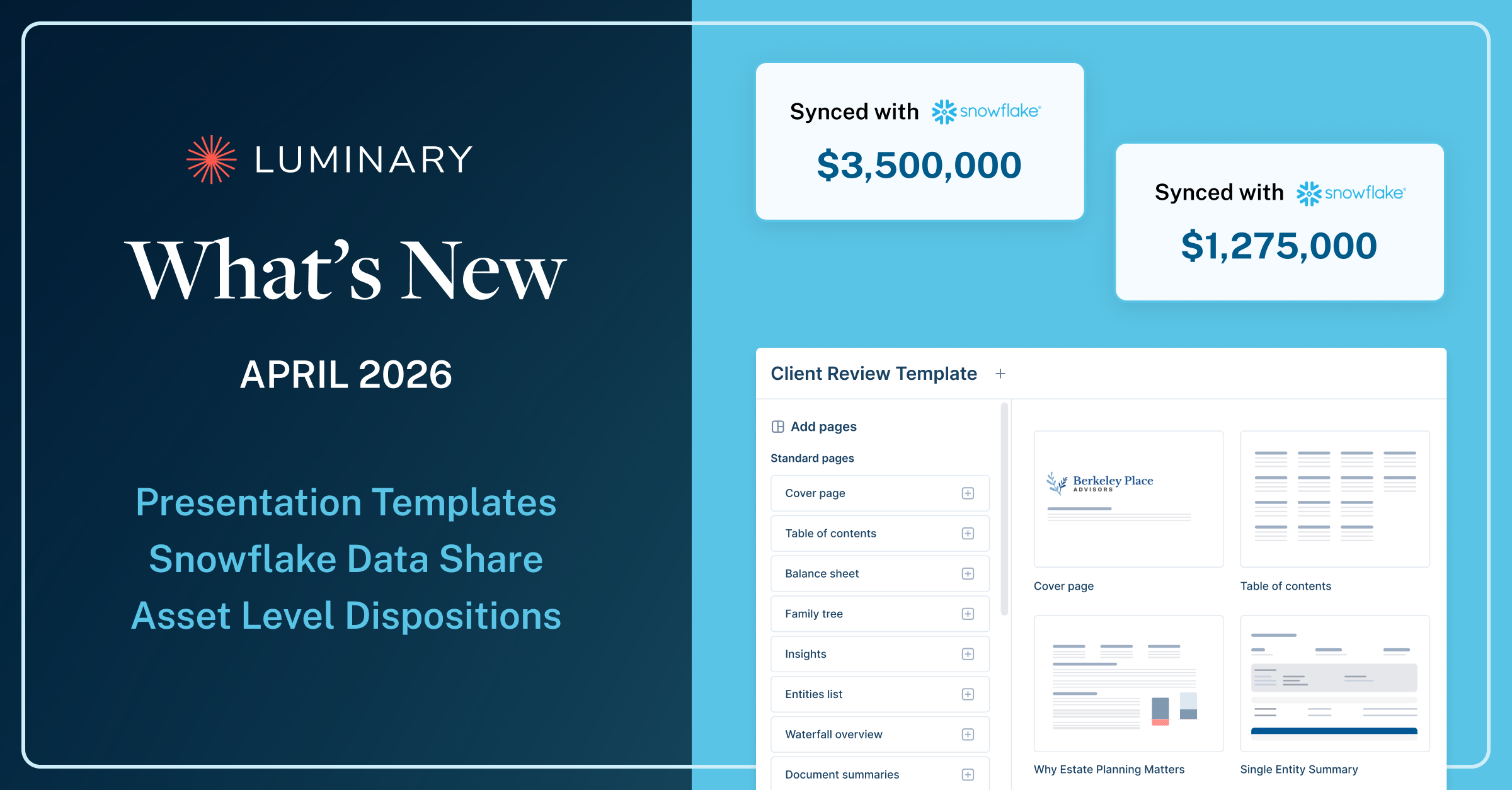

Presentation Templates lead this month's release, bringing reusable, firm-branded formats that apply across every household in a single click. We also added Snowflake Data Sharing, asset-level dispositions, a redesigned Balance Sheet, new liquidity metrics, and self-serve tenant access controls.
Build Once, Present to Every Client: Presentation Templates Are Live
Luminary users can now create presentation templates — reusable formats that can be applied across households in a single step. Templates support Luminary's existing slide types and allow teams to embed their standard presentation structure, firm branding, and preferred content layout into a format they build once and reuse everywhere.
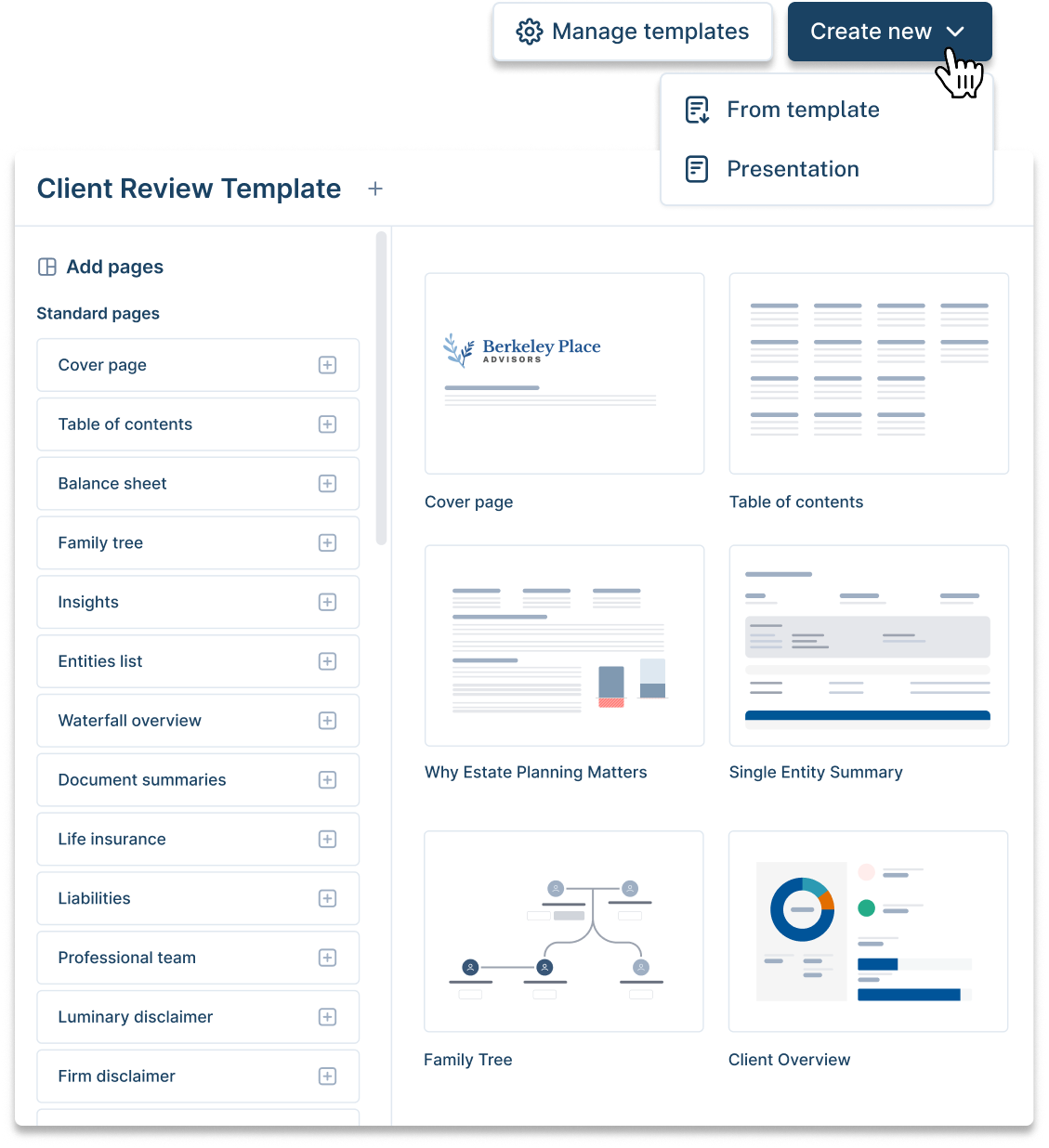
This release also introduces variables on custom pages — cover pages, custom slides, and dividers — that let users set placeholders for client-specific information like names, dates, and key figures, reducing manual entry at presentation time. Plus:
- Waterfall bundles: Users can now add waterfall bundles directly to a template, making multi-scenario waterfall analysis a standard part of every client presentation.
- Page controls: Users can drag and drop waterfall pages to reorder them and select exactly which pages to include — giving advisors full control over the shape of each presentation.
- Coming soon: Additional slide types will be supported in templates, including waterfall overviews, beneficiary reports, waterfall comparisons, and document summaries.
Sync Asset Data Automatically with Snowflake
Luminary now supports direct data sharing for customers running Snowflake databases, enabling household, account, and asset-level valuations to sync automatically on a nightly basis. Data stays entirely within the customer's Snowflake environment — Luminary accesses it via read-only Secure Data Sharing, with customer-controlled permissions that can be adjusted or revoked at any time.
Model Asset Level Distributions
Luminary now supports asset level dispositions, enabling advisors to model distributions at the individual asset level — specifying exactly which assets transfer to which beneficiaries, as the trust documents describe. Each asset can be transferred in kind, preserving growth assumptions and any valuation discounts through the death event, or designated for liquidation, where the source entity's characteristics are not carried through.
A More Configurable Balance Sheet
The Balance Sheet has been redesigned to be cleaner, and more configurable, both in the platform and in client presentations. Edit options have been extended to the presentation view, giving advisors more control over how the balance sheet is displayed to clients. Additional enhancements include simplified layout controls, asset level views within presentations, summary metrics, full export support, and the ability to rename the balance sheet slide.
New Summary Metrics on the Client Overview
The Client Overview page and Entities list now display new summary metrics showing the share of the estate held in liquid assets, giving advisors immediate visibility into liquidity positioning. These metrics are designed to support the quick assessments that come up most often in estate planning conversations — particularly when evaluating whether liquid assets are sufficient to cover estate taxes.

New Case Study: How New Republic Partners Brings Complex Estate Plans to Life
New Republic Partners, a $3B multi-family office serving multigenerational families, shares how Luminary has become central to their estate planning process — from generating client-ready summaries and visualizations to enabling richer conversations with families about legacy, governance, and next-generation engagement. The case study explores how the firm's advisors use Luminary's AI document tools, modeling capabilities, and collaboration features to deliver more dynamic, strategic planning experiences for the families they serve.
New Blog: 3 Strategic Questions Before Embedding AI into Your Estate Planning Workflow
Luminary’s Pat Gordon draws on conversations with hundreds of advisory firms to outline the three strategic questions every firm should answer before adopting AI for estate planning — from defining your firm's AI identity, to the build vs. buy decision, to the value of a purpose-built planning environment. It's a candid, pattern-recognition perspective on what separates firms that make confident, durable AI decisions from those that revisit the same debate a year later.