What's new at Luminary: March update
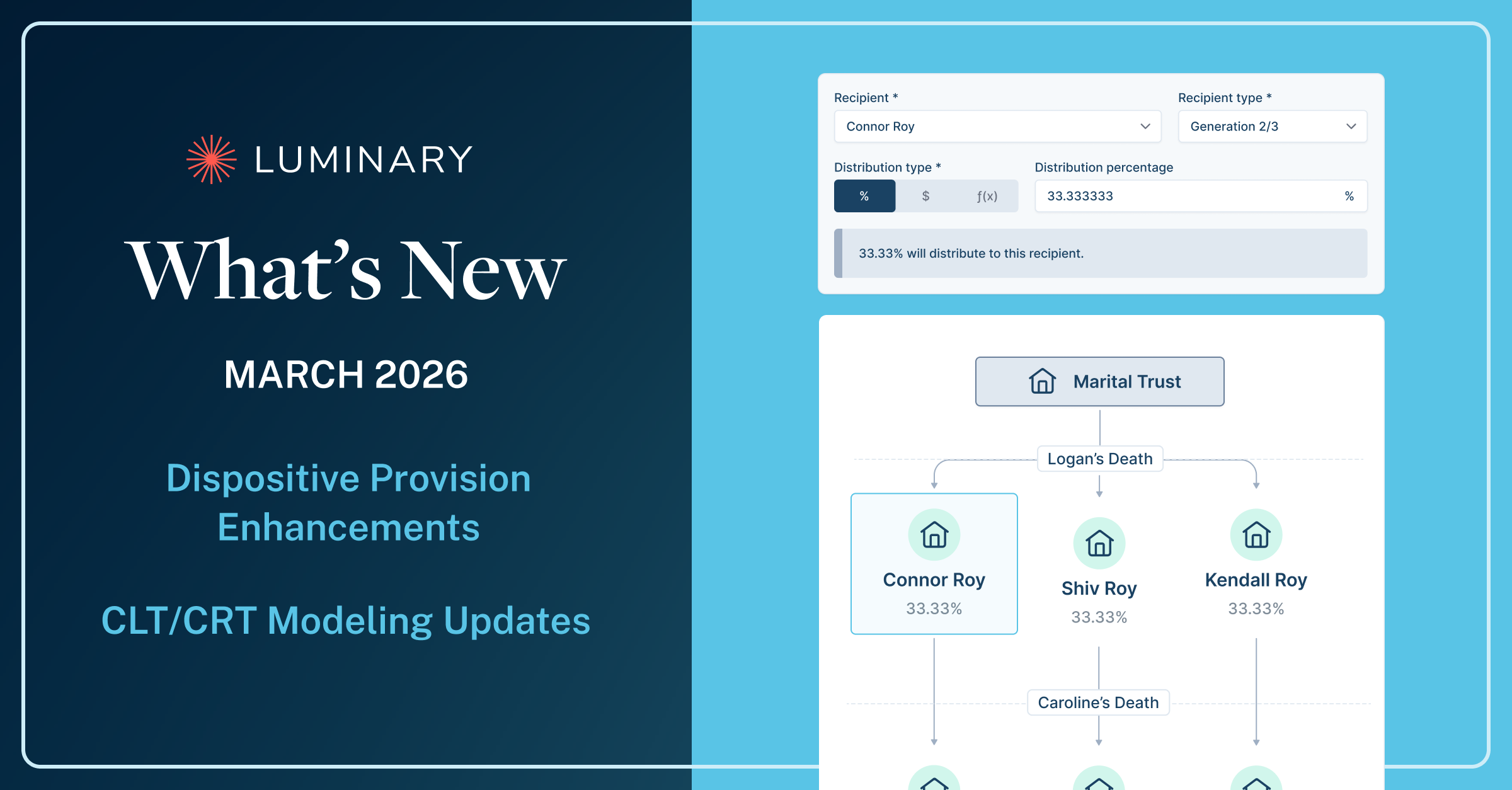

This month’s release introduces more powerful modeling for complex Dispositive Provisions, along with enhanced CRT/CLT and pourover will capabilities to better reflect real-world estate planning scenarios. We’re also sharing our latest on-demand webinar and two new thought leadership posts exploring why wealth transfer is emerging as a defining growth lever for advisory firms in 2026.
More Powerful Modeling for Complex Dispositive Provisions
Estate language is rarely simple — your modeling tools shouldn’t be either. We’ve expanded Luminary’s Dispositive Provision (DP) capabilities to better reflect how sophisticated plans are actually drafted and funded.
New enhancements include:
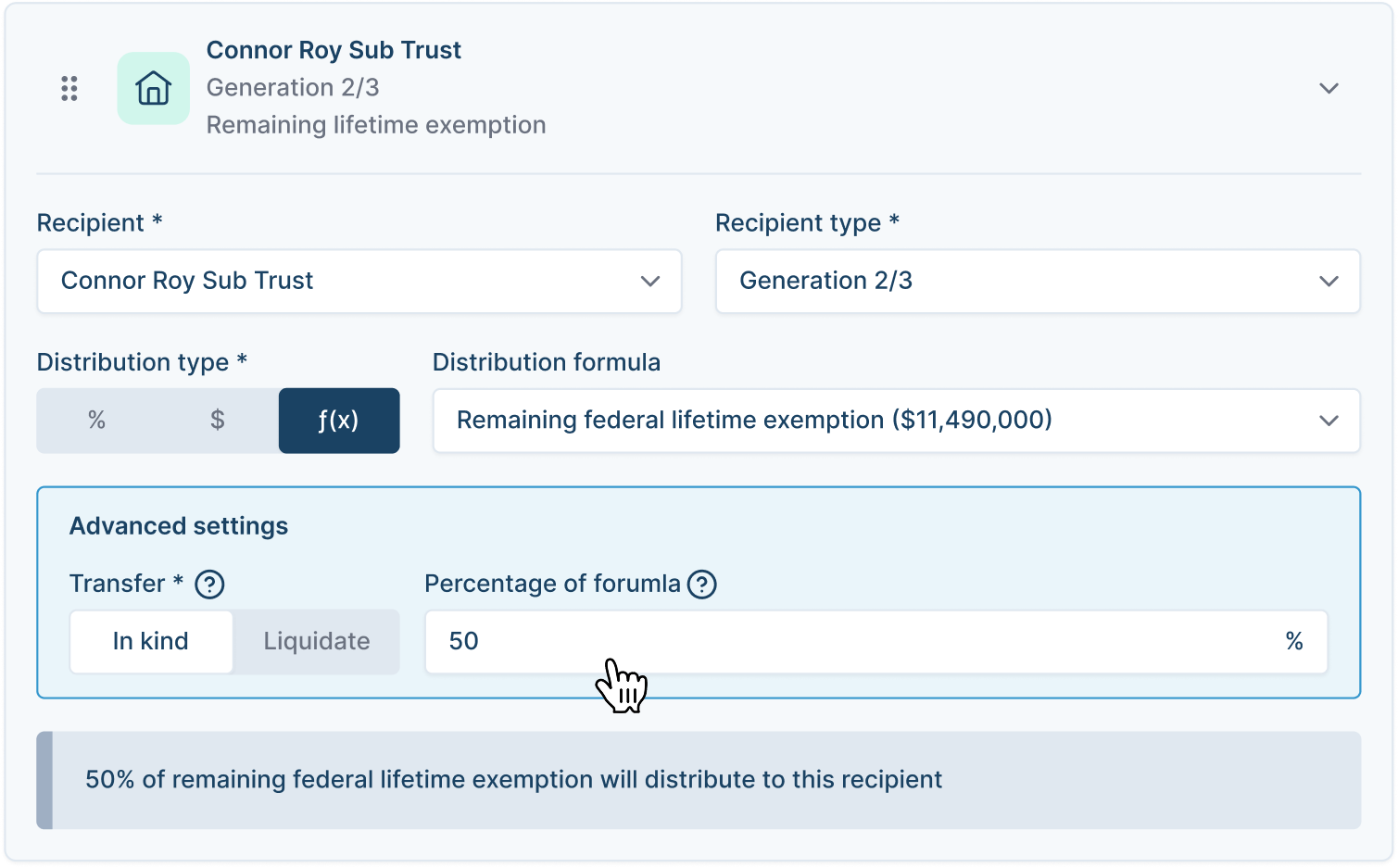
- Percentage of formula-based amounts — Distribute a portion of formulaic options, such as 50% of remaining lifetime exemption.
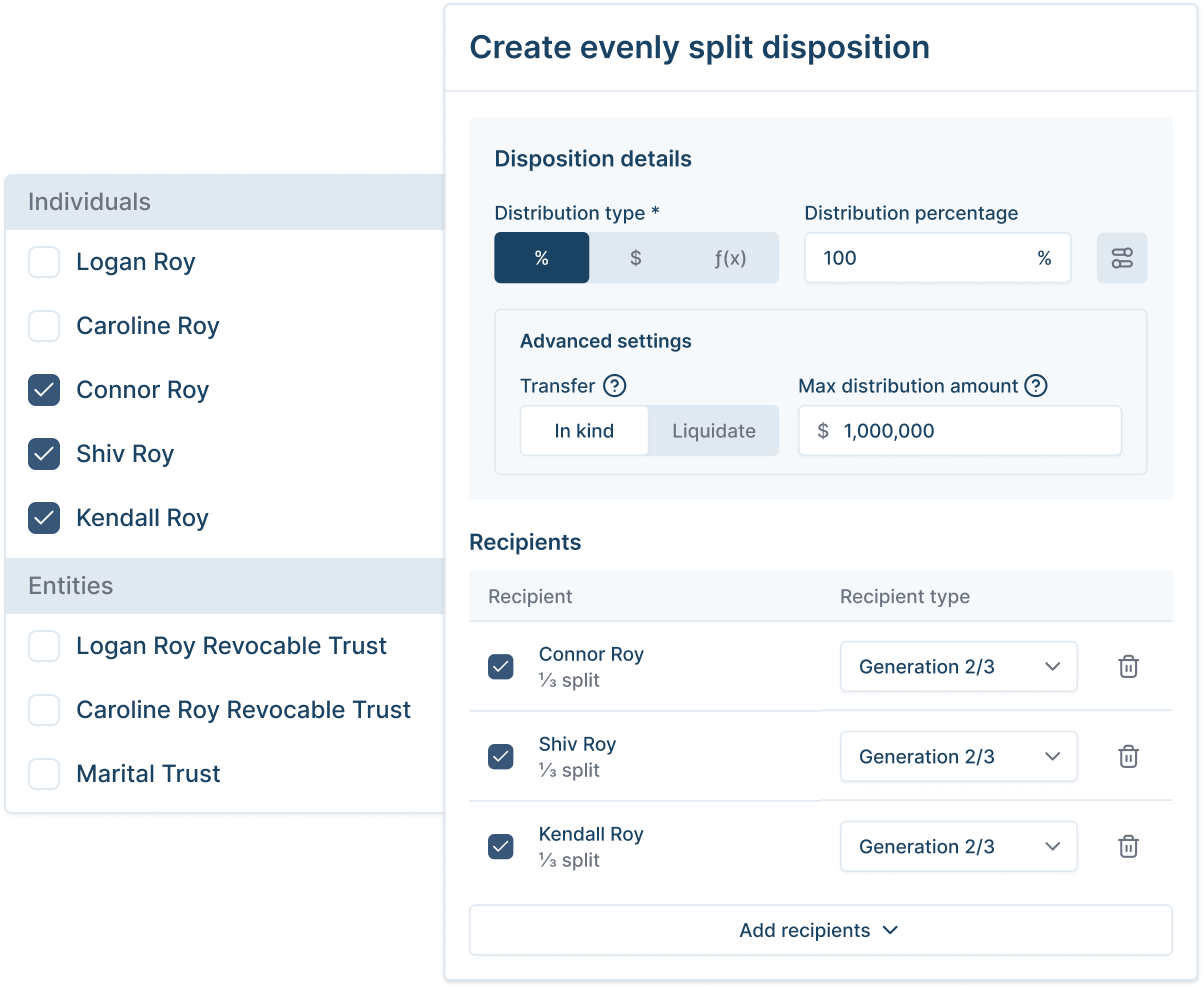
- Percentage with a dollar cap — Apply a percentage gift while setting a maximum total distribution dollar amount.
- Even splits, automatically calculated — Divide assets equally (e.g., 1/3 each) without manual math or rounding issues.
- Multi-entity funding — Fund a single bequest collectively across multiple entities from a shared value pool.
- Inflation adjustments — Configure fixed-dollar distributions to grow over time using customizable inflation assumptions.
We’ve also streamlined the DP form with a new option to quickly clear all recipients for a specific death order — making updates faster as plans evolve.
Together, these improvements bring greater precision, flexibility, and clarity to complex estate modeling.
CRT and CLT Modeler Update
Charitable modeling just got even better. We’ve updated the CRT and CLT modeler to assume a 35% effective income tax rate (rather than 37%), reflecting current limitations on itemized deductions that reduce the net value of charitable deductions for top-bracket taxpayers — helping projected tax savings better align with real-world outcomes.
Enhanced Pourover Will Modeling
Model more nuanced estate distributions with expanded pourover will capabilities. You can now structure partial pourover allocations, incorporate specific bequests alongside revocable trust transfers, and rely on automatic recipient recognition with clearer waterfall labeling — all while ensuring accurate tax treatment when assets pass to out-of-estate entities.
Now Available On Demand: Scaling Organic Growth with Wealth Transfer
Our recent webinar is now available to watch on demand. Explore why organic growth in 2026 will hinge on leading with wealth transfer — and see a live walkthrough of Estate360, Luminary’s framework for transforming estate documents into client-ready summaries in minutes to scale consistent, growth-driving conversations.
New from David Barnard: Why 2026 Is the Year of Organic Growth
In our latest blog, CEO David Barnard shares why he believes 2026 marks a turning point for advisory firms, and why wealth transfer may be the most powerful (and underutilized) lever for differentiation. If you’re thinking about where real competitive advantage will come from next, this is a conversation worth reading.
Enterprise-Ready by Design: Inside Luminary’s Architecture
When enterprise firms evaluate planning technology, the real questions go far beyond features. In this new post, Head of Engineering Ian Lyons breaks down how Luminary approaches data control, AI governance, encryption, integrations, and access management — and why “trust us” isn’t a sufficient answer for sophisticated institutions.