Screenshot of a financial table titled 'Only show assets in estate' showing assets and liabilities for Sam Young including cash, retirement, investments, real estate, businesses, tangible personal property, and receivables with total assets of $1,550,000 and an in estate total of $9,450,000.
FOR TAX ADVISORS

Expand the scope of advice beyond the tax return

Luminary gives tax advisors a complete view of estate structures, ownership, assets, and planning alternatives—so you can identify more opportunities, model their impact, and advise clients in the context of their full financial plan.
Book a Demo
BNY
Focus Financial
Wealth Enhancement
Carson Wealth
Armanino
IEQ
SCS Financial
Sapient
Caprock
Pryor Cashman
Curi Capital
Ferguson Wellman
Vestgen
Gleneagles
New Republic
Truxton
Bragg
Copper Beach
Outrun Capital
Wealth Quest
Ohana
Coury
BNY
Focus Financial
Wealth Enhancement
Carson Wealth
Armanino
IEQ
SCS Financial
Sapient
Caprock
Pryor Cashman
Curi Capital
Ferguson Wellman
Vestgen
Gleneagles
New Republic
Truxton
Bragg
Copper Beach
Outrun Capital
Wealth Quest
Ohana
Coury

Why leading tax advisors use Luminary:

Turn documents into trusted intelligence

Analyze complex trusts and entity documents to surface tax-relevant facts and planning opportunities, with key details linked directly to their source.

Model estate outcomes with speed and precision

Connect estate structures and asset data to purpose-built, deterministic calculations, then compare planning alternatives in one place.

Make sophisticated planning advice easier to understand

Translate complex structures, tax implications, and planning alternatives into visuals and materials clients can easily grasp and use to make informed decisions.

Collaborate seamlessly with your client’s other advisors

Communicate directly with attorneys and wealth advisors from a shared record, and increase the efficiency and impact in how your advice is delivered.
Luminary AI

Turn legal documents into tax-ready context

Luminary AI extracts and organizes provisions, ownership relationships, and entity details from estate planning documents. Source-cited summaries and answers help tax teams get oriented quickly, verify critical facts, and identify the structures that matter before analysis begins.
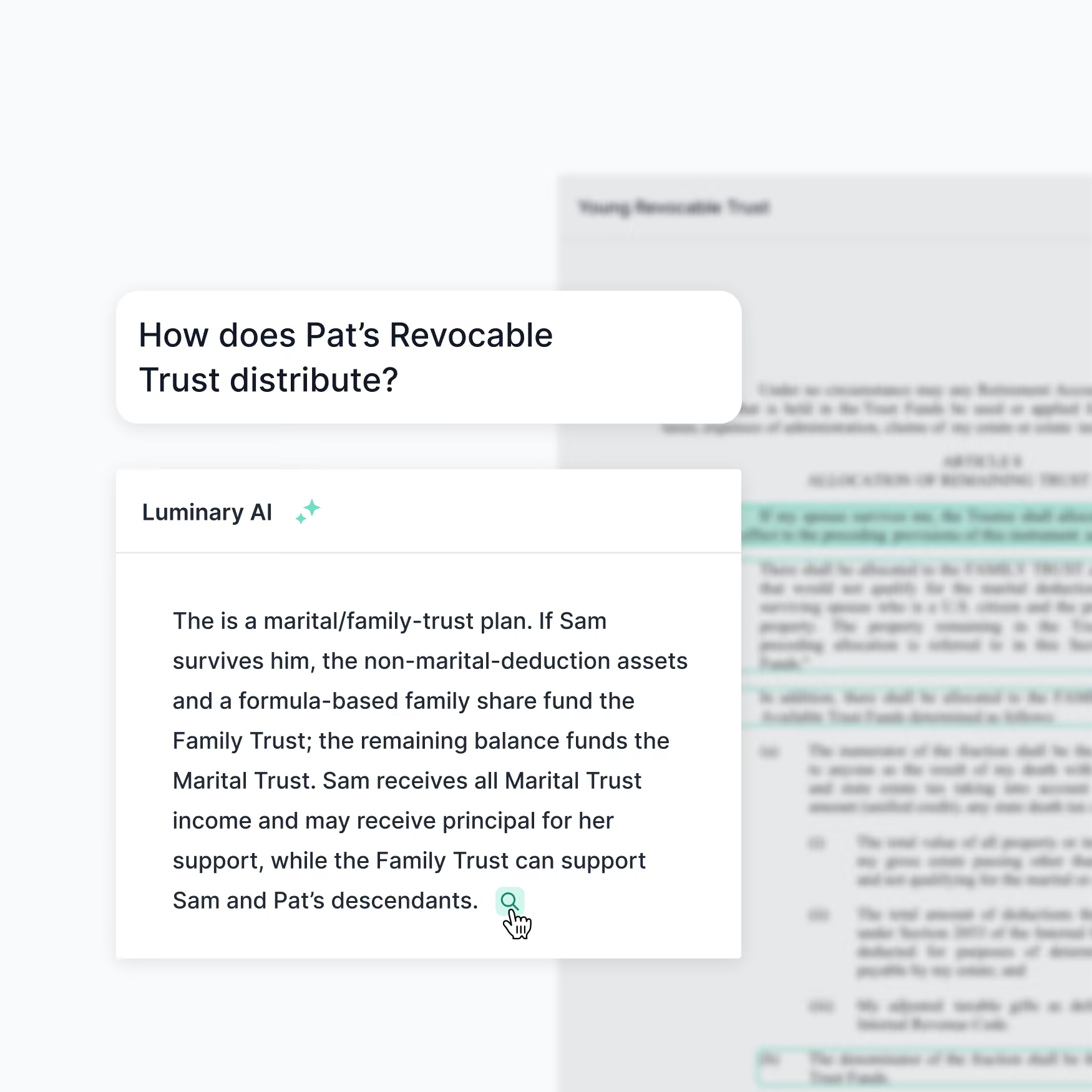
A digital assistant interface shows a question: 'How does Pat’s Revocable Trust distribute?' with an AI-generated response explaining that it is a marital/family-trust plan where if Sam survives Pat, non-marital deduction assets and a formula-based family share fund the Family Trust; the remaining funds go to the Marital Trust. Sam receives all income from the Marital Trust and may get principal for support, while the Family Trust supports Pat and Sam’s descendants.
Estate Waterfall

Model sophisticated strategies in one place

Connect the estate plan to the client's balance sheet and evaluate gifts, GRATs, SLATs, IDGTs, charitable strategies, and other planning alternatives with built-in tax logic. Adjust timing, growth, and other assumptions to compare potential outcomes without rebuilding disconnected spreadsheets for every scenario.
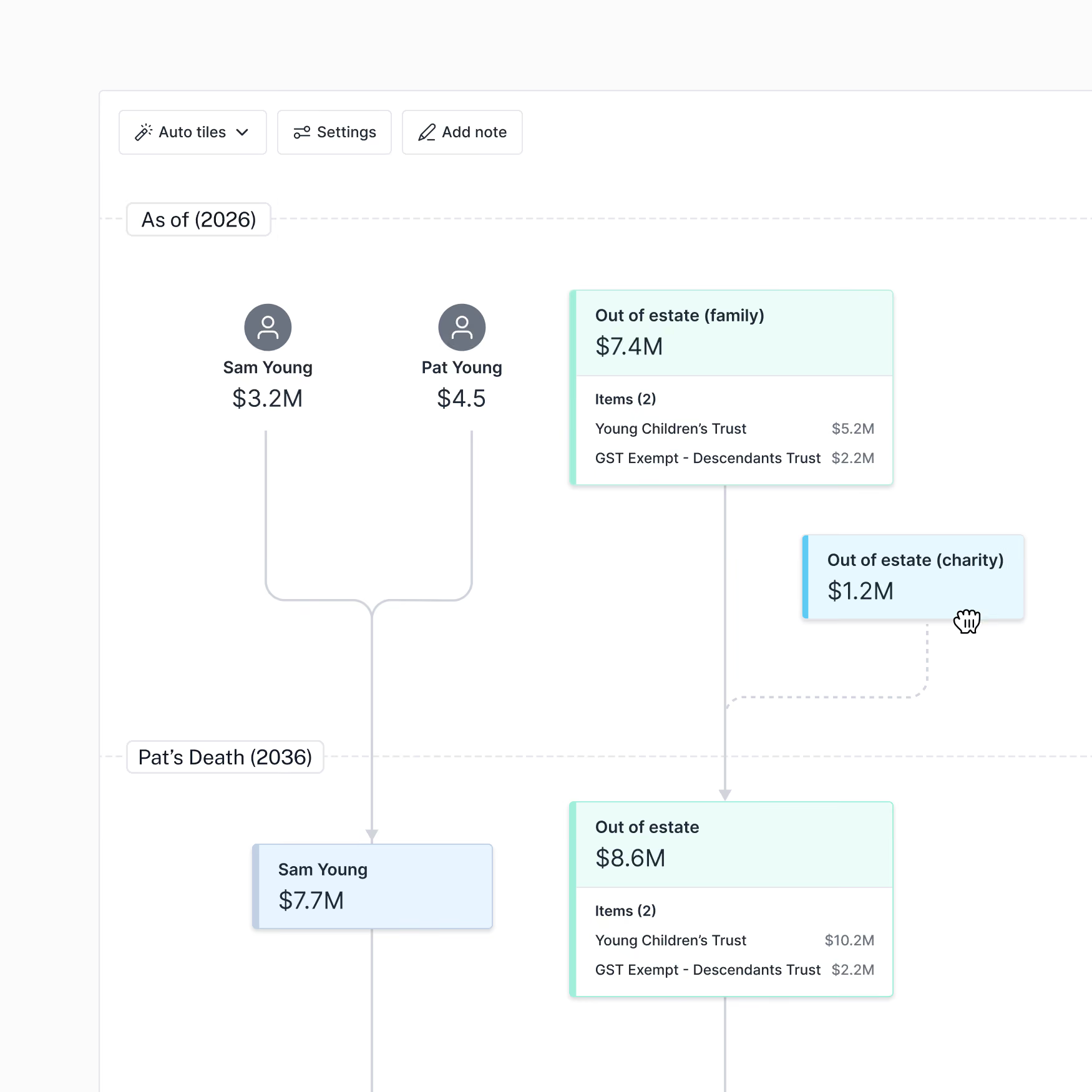
Diagram showing an estate value flow starting in 2026 with Sam Young owning $3.2M and Pat Young owning $4.5M. After Pat's death in 2036, Sam Young has $7.7M. The estate includes an out of estate (family) value of $7.4M composed of Young Children's Trust $5.2M and GST Exempt Descendants Trust $2.2M. There is also an out of estate (charity) value of $1.2M. The combined out of estate value becomes $8.6M with Young Children's Trust $10.2M and GST Exempt Descendants Trust $2.2M.
Tax Analysis

Show the value behind the recommendation

Turn technical analysis into clear, client-ready comparisons that illustrate projected estate tax, beneficiary, and charitable outcomes. Track gift and exemption usage, quantify the potential tax value created by planning, and give clients and fellow advisors a shared basis for making informed decisions.
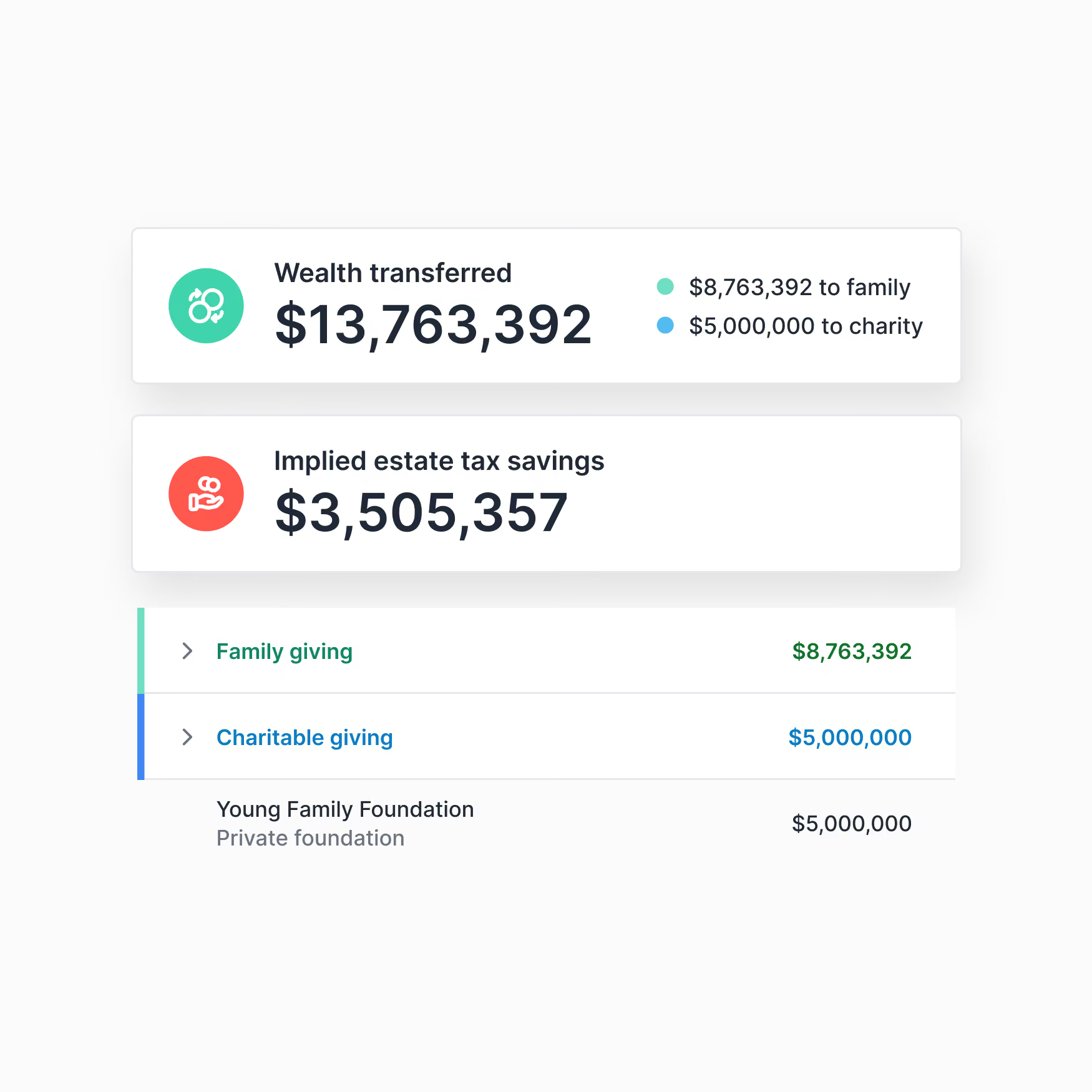
Financial summary showing wealth transferred at $13,763,392 split into $8,763,392 to family and $5,000,000 to charity, with implied estate tax savings of $3,505,357. Details show family giving of $8,763,392 and charitable giving of $5,000,000, including a $5,000,000 donation to the Young Family Foundation, a private foundation.
A digital assistant interface shows a question: 'How does Pat’s Revocable Trust distribute?' with an AI-generated response explaining that it is a marital/family-trust plan where if Sam survives Pat, non-marital deduction assets and a formula-based family share fund the Family Trust; the remaining funds go to the Marital Trust. Sam receives all income from the Marital Trust and may get principal for support, while the Family Trust supports Pat and Sam’s descendants.
Diagram showing an estate value flow starting in 2026 with Sam Young owning $3.2M and Pat Young owning $4.5M. After Pat's death in 2036, Sam Young has $7.7M. The estate includes an out of estate (family) value of $7.4M composed of Young Children's Trust $5.2M and GST Exempt Descendants Trust $2.2M. There is also an out of estate (charity) value of $1.2M. The combined out of estate value becomes $8.6M with Young Children's Trust $10.2M and GST Exempt Descendants Trust $2.2M.
Financial summary showing wealth transferred at $13,763,392 split into $8,763,392 to family and $5,000,000 to charity, with implied estate tax savings of $3,505,357. Details show family giving of $8,763,392 and charitable giving of $5,000,000, including a $5,000,000 donation to the Young Family Foundation, a private foundation.

Frequently Asked Questions

Answers to the questions we hear most from tax advisors. If your question isn’t here, we’ll answer it directly.
Contact Us
Does Luminary provide tax advice?
No. Luminary does not provide tax, legal, or investment advice. It helps tax advisors turn the plan into tax-ready context, model potential outcomes, and prepare clear comparisons to support the professional judgment and recommendations you provide.
Can Luminary model sophisticated wealth-transfer strategies?
Yes. Connect estate structures to the client’s balance sheet and evaluate gifts, GRATs, SLATs, IDGTs, charitable strategies, and other planning alternatives with built-in tax logic. Adjust timing, growth, and other assumptions to compare potential outcomes in one place.
What types of tax calculations does Luminary support?
Luminary models federal estate tax, GST tax, state estate tax, and inheritance tax. Inheritance-tax coverage includes all five states that levy it—Pennsylvania, Kentucky, New Jersey, Nebraska, and Maryland—with outcomes connected to the plan, beneficiary relationships, asset situs, and tax-allocation choices.
Does Luminary AI train models with client data?
No. Neither Luminary nor our model provider partners train on client data, and our AI does not retain any data after workloads are processed.
How can we verify the information behind an analysis?
Luminary ties AI-generated summaries and answers to the underlying source material, so your team can verify critical facts in the governing documents. Source citations and review controls make it easier to validate the information and assumptions behind the analysis.
Can tax advisors work alongside attorneys and wealth advisors in Luminary?
Yes. Luminary gives tax advisors, attorneys, and wealth advisors permissioned access to a shared record of documents, asset data, and planning analysis. Teams can coordinate from the same current information instead of reconciling disconnected files and assumptions.